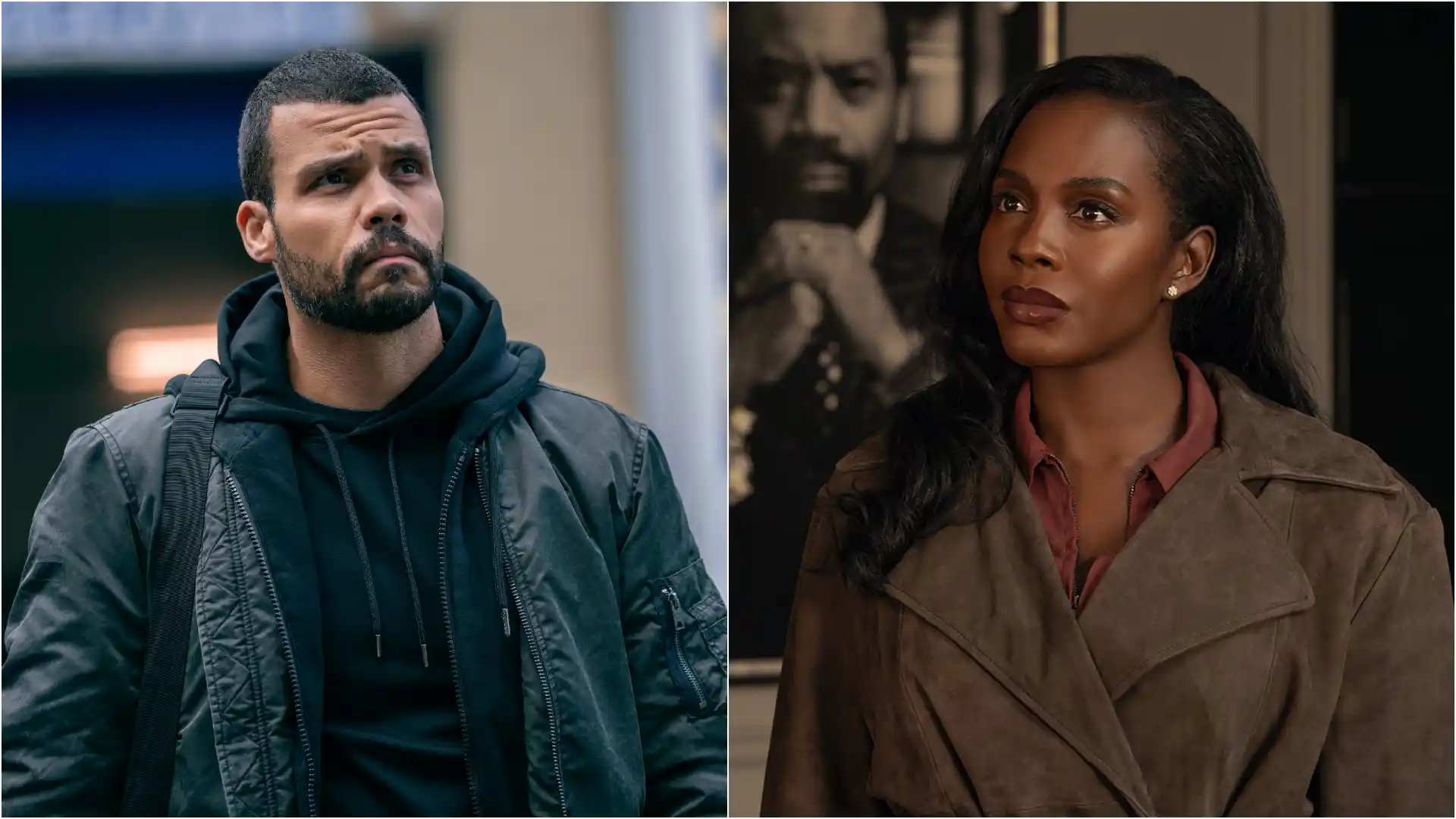
Howard Charles and Deborah Ayorinde say the unseen backstory between their Fightland characters, Duke Kilroy and Joy Marshall, shaped performances that never needed to spell that history out on screen on the Starz series.
How did Howard Charles build Duke’s history with Joy?
Charles said extensive research is central to his process, and that extended to building a shared past between the two characters even though little of it is shown directly. “Just because it’s not necessarily front and center doesn’t mean it’s not a part of the process and a part of the building of that character,” Charles said during cast’s interview with BLKCinema.com. “I’m someone who does an extensive amount of research and building of the character from the ground up as it were, and your history, anyone’s history is a part of that. And so I was very clear about our history going into it.”
Charles said he and Ayorinde worked through that backstory together, alongside the show’s writers. “I do remember us having a conversation where we were, I think alongside with the showrunners, exchanging ideas about what that was so we could have that shared history,” he said. “It helps you embed the character that much deeper. And as if you are dying fabric, the color becomes even richer because you’ve done that work and you’ve had those conversations and made those decisions about your history. It’s really imperative to be singing from the same hymn sheet, as it were.”
What did Deborah Ayorinde discover about Joy through those conversations?
Ayorinde said one exchange with Charles and the show’s directors clarified what hurts Joy most about Duke. “It was really beautiful to have those conversations with Howard, with the different directors about their backstory and how they came to be,” she said. “One conversation that we had in particular really helped in that in this conversation, we discovered that what Joy feels most hurt about with Duke is that he keeps on choosing himself and he’s been choosing himself and his dreams and his goals. And it’s like, wait for me, wait for me, wait for me, wait for me, wait for me.”
She said that same conversation also helped her understand Joy’s own arc. “I think one, it just really helped me to understand Joy’s frustration and her hurt, but also it really helped me to understand that Joy’s purpose as well, because she is really after herself and trying to figure out herself,” she said. “And the unfortunate piece is that she thinks that she can be found in other people. And I think in that I even realized that, wait a minute, the answer is here. The answer isn’t her running off with her first love. The answer is within herself. And so I thought that was really, really interesting, but those conversations were so important.”
Featured image photo credit: Photo: Starz
Leave a Reply